





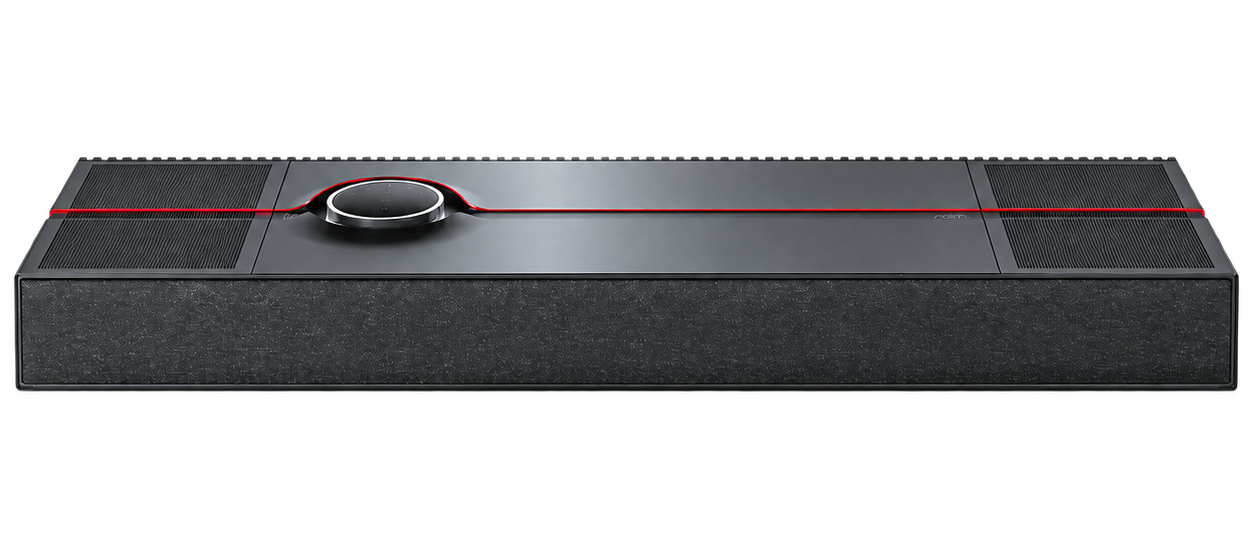
Naim’s original Mu-so changed expectations of what an all-in-one wireless music system could achieve. It combined serious amplification, intelligent digital processing and unmistakable Naim design in a product that was simple enough to use every day.
Now Naim has taken the concept considerably further.
The new Naim Mu-so Utopia is the company’s most ambitious all-in-one system to date. Developed using Naim’s electronics and streaming expertise alongside Focal’s acoustic engineering, it promises the scale and involvement of a much larger hi-fi system from one beautifully finished enclosure.
With 720 watts of amplification, 15 individual drive units, Dolby Atmos and advanced room calibration, this is much more than a conventional wireless speaker. It is designed to become the audio centre of the home, handling music, television, films and gaming without the complexity of a traditional multi-box system.
The Utopia Name
Utopia represents the highest level of Focal loudspeaker engineering. The name is normally reserved for products created without the usual compromises, using the company’s most advanced materials, technologies and manufacturing techniques.
Mu-so Utopia is the first Naim product to carry that name.
This is significant. Rather than being a routine update to the existing Mu-so range, it represents a flagship interpretation of the all-in-one concept. Naim has provided the electronics, amplification, streaming platform and digital processing, while Focal’s influence can be found throughout the loudspeaker system.
The result brings two highly respected areas of expertise together in one product: British audio electronics and French acoustic engineering.
Fifteen Drivers and 720 Watts
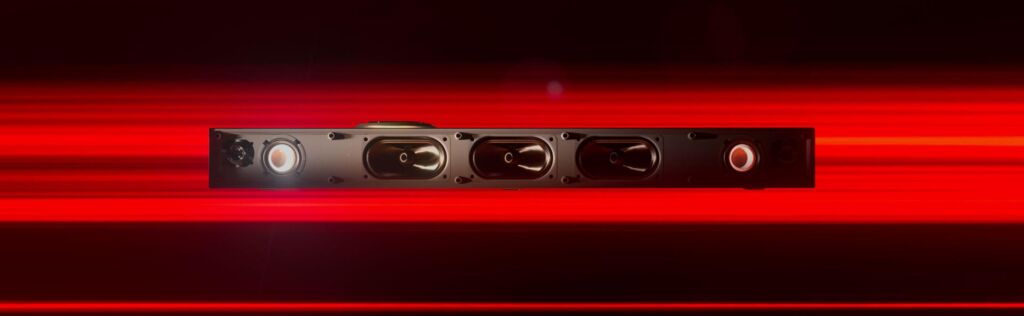
Inside Mu-so Utopia are 15 individually powered speaker drivers, arranged across the front, sides and top of the cabinet.
The front array includes three woofers, two Focal W-cone midrange drivers and two new-generation PRISM tweeters. Additional full-range drivers are positioned on the sides and top of the enclosure, allowing the system to create a much wider and more immersive soundfield than a conventional front-facing speaker.
Power comes from a combination of Class AB and Class D amplification, delivering a total output of 720 watts. Class AB amplification is used for the tweeters, where refinement and subtlety are particularly important, while efficient Class D amplification controls the remaining drive units.
Each part of the system has been engineered to work together under the control of Naim’s digital signal processing. Frequency response, phase, timing, driver protection and spatial presentation can all be managed with considerable precision.
This level of control is one of the major advantages of an active all-in-one design. Because the amplifiers, processing and loudspeaker drivers have been developed as a complete system, every element can be optimised for the role it performs.
Focal Acoustic Technology
The W-cone midrange drivers used in Mu-so Utopia draw on technology developed for Focal’s high-end loudspeakers.
A loudspeaker cone needs to be light enough to respond quickly, rigid enough to avoid unwanted flexing and well damped enough to prevent resonances. Focal’s W construction is designed to balance these requirements, helping the drivers reproduce voices and instruments with clarity, speed and natural tonal definition.
At higher frequencies, the new PRISM tweeters are designed to deliver detailed treble while contributing to the system’s wide spatial presentation.
The three front-mounted woofers provide the weight and low-frequency extension required to give music and film soundtracks convincing scale. Mu-so Utopia reaches down to a claimed 25Hz at –6dB, which is remarkable for a single-cabinet system of this kind.
For particularly large rooms or customers who want even greater low-frequency impact, an RCA output allows an external subwoofer to be connected.
Dolby Atmos from a Single System
Mu-so Utopia is designed for more than two-channel music.
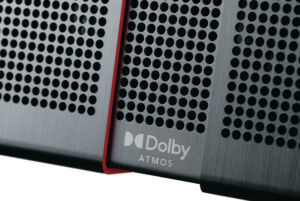
Its side- and upward-firing drivers allow it to reproduce Dolby Atmos content with a greater sense of width, height and depth. Sound can extend beyond the physical dimensions of the enclosure, creating a more enveloping experience for films, television, concerts and games.
An HDMI eARC connection allows compatible televisions to send high-quality multichannel audio directly to the system. CEC support also enables convenient everyday operation alongside the television.
Several dedicated listening modes are available, including settings for movies, music, gaming and podcasts. These modes adjust the presentation to suit different types of content, while a night mode helps preserve clarity and impact at lower listening levels.
This versatility makes Mu-so Utopia an interesting alternative to both a conventional soundbar and a separate hi-fi system. It is intended to provide convincing music reproduction without sacrificing the scale and immersion expected from modern film and television sound.
Serious Music Streaming
At the heart of Mu-so Utopia is the Naim Pulse Platform, which brings together the company’s latest streaming architecture, digital signal processing and connectivity.
High-resolution playback is supported up to 32-bit/384kHz, with compatibility for formats including WAV, FLAC, AIFF, ALAC and DSD.
Streaming options include:
- Apple AirPlay
- Google Cast
- Spotify Connect
- TIDAL Connect
- Qobuz and Qobuz Connect
- Presto Music
- UPnP
- Bluetooth
- Internet radio
Both Wi-Fi 6 and Gigabit Ethernet connectivity are provided. The system can also become part of a wider Focal and Naim multiroom installation, with compatible streamers controlled through the same app.
For external sources, Mu-so Utopia includes HDMI eARC and an optical digital input. This allows a television, CD transport, Blu-ray player or games console to become part of the system.
Sound Tailored to the Room
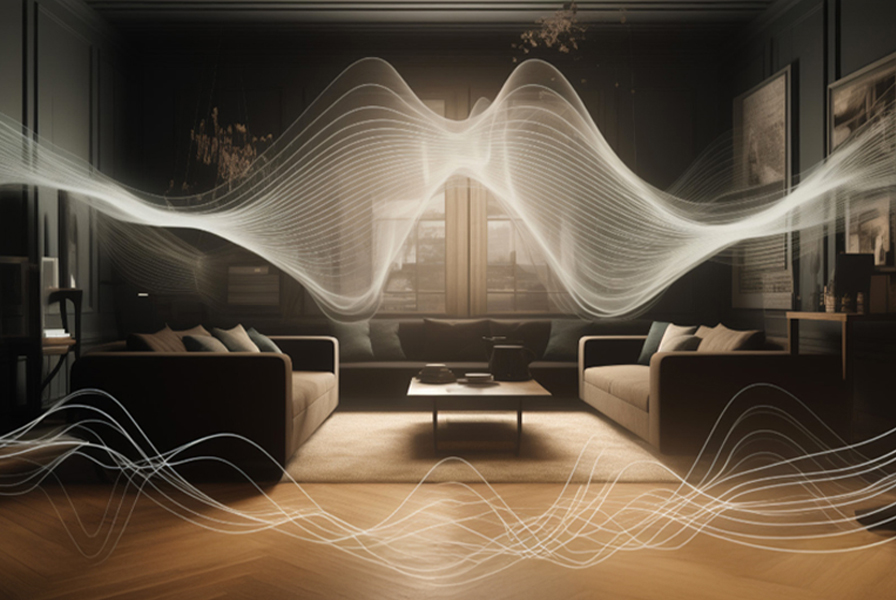
Even the best loudspeaker can be affected by its surroundings. Walls, furniture, ceiling height and listening position all influence the sound that reaches the listener.
Mu-so Utopia addresses this with Focal’s patented ADAPT — Adaptive Acoustic Personal Tuning — technology.
During setup, the Focal & Naim app asks for information about the system’s position relative to the walls, ceiling and listening area. ADAPT then uses these measurements to optimise the system’s output for the room.
This is particularly useful for an all-in-one product, which may be placed on a cabinet, beneath a television or close to a wall. Rather than expecting every room to behave in the same way, Mu-so Utopia can adjust its performance to suit its environment.
The system also offers a range of selectable audio modes, allowing its presentation to be tailored for stereo music, Dolby Atmos material, films, games or speech.
Designed to Be Seen
Mu-so has always been as much a piece of industrial design as a piece of audio equipment, and the Utopia continues that tradition.
The cabinet is constructed from black anodised aluminium, giving the system a reassuringly solid and purposeful appearance. A red accent running across the enclosure provides the distinctive Utopia signature without becoming overly decorative.
Naim’s illuminated control dial sits on the top panel. It combines a rotary volume control with a touch-sensitive interface, while a proximity sensor brings the display to life as the user approaches.
At one metre wide and weighing 14.1kg, Mu-so Utopia has considerable physical presence. However, it remains dramatically simpler than an equivalent system assembled from a streamer, amplifier, multiple loudspeakers and the necessary cables.
It is a product intended to sit confidently within the room rather than disappear into the background.
Who Is Mu-so Utopia For?
Mu-so Utopia occupies an unusual and potentially very appealing position.
It is designed for listeners who care deeply about sound quality but do not necessarily want a conventional collection of hi-fi components. It may also suit homes where a pair of floorstanding speakers, equipment rack and surround-sound installation would be impractical.
For music lovers, it offers Naim streaming, high-resolution playback and amplification designed as one complete system.
For film and television, HDMI eARC, Dolby Atmos and dedicated upward- and side-firing drivers provide a more immersive experience than a conventional stereo speaker.
For gaming, its combination of scale, spatial presentation and low-frequency weight promises considerably more involvement than typical television audio.
It could also be an excellent solution for a large open-plan living area, where simplicity, appearance and ease of use are as important as outright performance.
More Than a Wireless Speaker
Calling Mu-so Utopia a wireless speaker does not really explain what it is.
It contains a high-resolution network streamer, sophisticated digital processing, 720 watts of amplification, 15 speaker drivers, Dolby Atmos decoding, room optimisation and extensive system control. It can replace much of the equipment normally required for both music and television sound.
That integration is central to its appeal. There are no questions about matching amplifiers to speakers, choosing suitable cables or finding space for several separate boxes. The entire system has been designed and tuned as one product.
A carefully selected separates system will always appeal to enthusiasts who enjoy building, upgrading and refining each individual component. Mu-so Utopia offers a different proposition: much of that engineering work has already been completed by Naim and Focal.
Our Thoughts
Mu-so Utopia looks like a logical but highly ambitious development of the original Mu-so idea.
The familiar simplicity remains, but the acoustic design, amplification and processing have moved into much more serious territory. The addition of Dolby Atmos and HDMI eARC also makes it a genuinely versatile home entertainment system rather than a product intended only for music streaming.
Most importantly, it reflects how many people now enjoy their music. Streaming, television, films and games increasingly share the same living space, but expectations of sound quality have not disappeared. Mu-so Utopia is designed to bring these different sources together without reducing everything to the level of an ordinary soundbar or wireless speaker.
At £4,499, it is unquestionably a premium product. However, it should be considered in the context of everything it replaces: streamer, DAC, amplification, loudspeakers, television audio system and much of the associated cabling.
For customers seeking genuine high-end performance with minimal clutter, Mu-so Utopia could be one of the most compelling all-in-one systems available.